Since ChatGPT launched in late 2022, one question has dominated discussions about artificial intelligence and work: is AI actually replacing writers and journalists, or simply changing how they work?
The evidence now suggests the answer is more nuanced than many headlines imply.
Research shows generative AI is already reducing demand for some types of writing work, particularly routine content creation and freelance assignments.
At the same time, there is far less evidence that professional journalists are being replaced on a large scale.
Instead, AI is reshaping newsroom workflows while also disrupting the economics that support journalism. As search and content creation continue to evolve, businesses are increasingly turning to an AI SEO agency to combine AI efficiency with human expertise, ensuring content remains accurate, authoritative and competitive in both traditional search results and AI-powered search experiences.
The clearest evidence comes from the freelance market, where writing is among the occupations most exposed to generative AI.
A peer-reviewed study published in 2025 found that workers in AI-exposed freelance occupations experienced fewer contracts and lower earnings after ChatGPT became widely available.
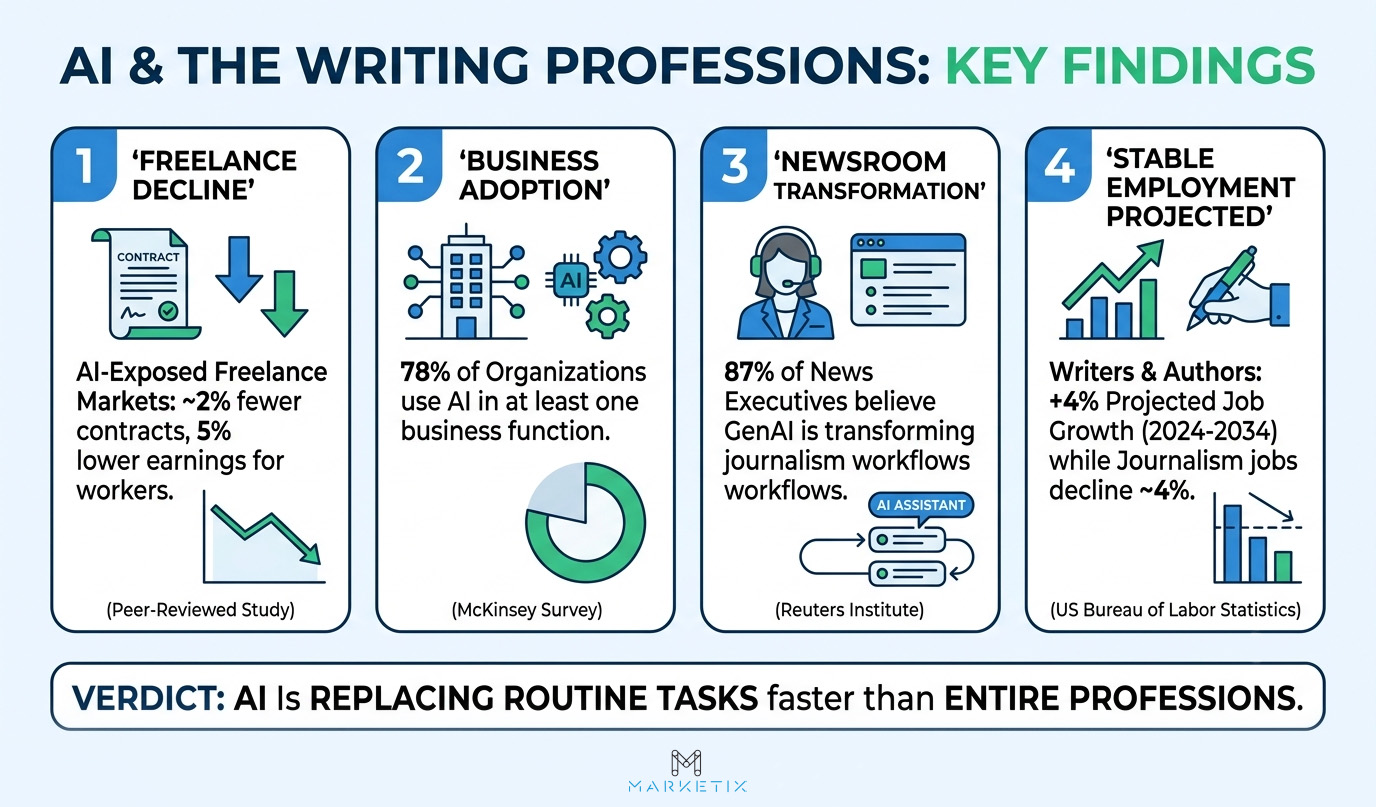
Researchers reported roughly 2% fewer contracts and 5% lower earnings, with writing and translation among the hardest-hit categories.
Brookings Institution concluded that generative AI had already reduced demand in freelance markets where clients could substitute routine writing tasks with AI-generated content.
Research also shows why this is happening. A landmark experiment published in Science found professionals using ChatGPT completed common writing tasks 40% faster while producing work rated 18% higher in quality than those working without AI.
These findings do not prove companies immediately laid off writers.
They do, however, demonstrate that organisations can produce the same volume of routine content with fewer labour hours, making reductions in freelance work and entry-level writing roles economically plausible.
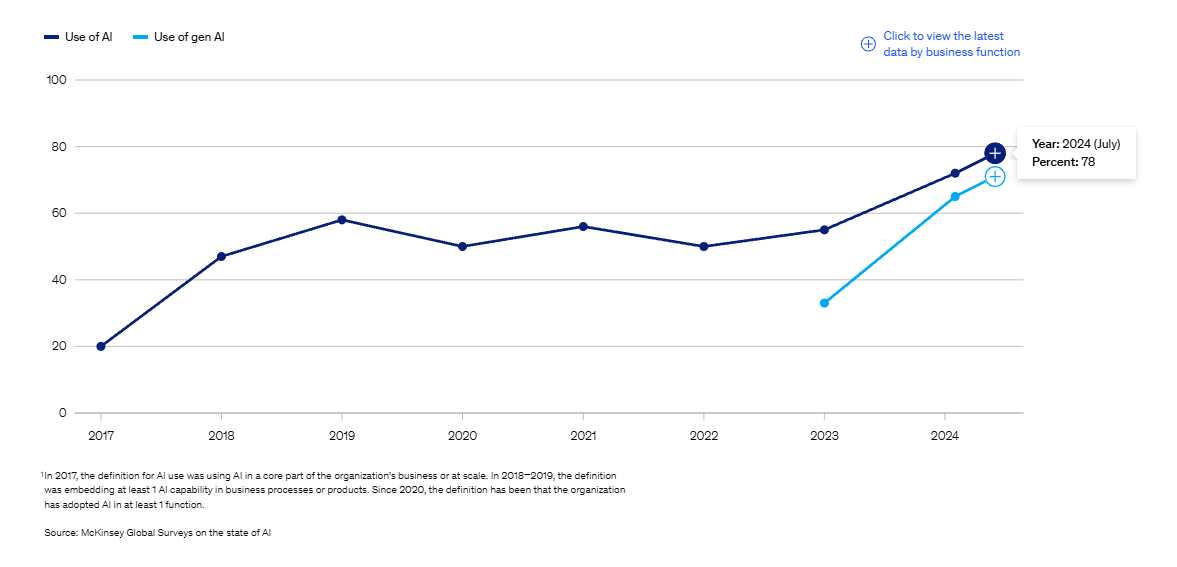
Business adoption reinforces this trend. McKinsey's 2025 global survey found 78% of organisations now use AI in at least one business function, while Microsoft's Work Trend Index reported 75% of knowledge workers already use generative AI at work. Marketing, communications and content creation are among the most common applications.
The evidence becomes less clear when examining journalism.
The Reuters Institute found that 87% of news executives believe generative AI is transforming journalism, with many organisations investing heavily in AI-powered workflows for transcription, summarisation, research and headline generation.
However, newsroom transformation is not the same as journalist replacement.
One of the most cited examples is Business Insider, which announced a 21% workforce reduction in 2025. Management linked the restructuring to falling search traffic, changing audience behaviour and the growing impact of AI-powered search experiences, while also committing to greater AI adoption.
Similarly, Nine Entertainment announced newsroom job cuts across The Sydney Morning Herald and The Age in 2026 while describing AI, declining search referrals and changing reader behaviour as major industry disruptions.
These examples show AI contributing to newsroom restructuring, but they do not prove journalists were directly replaced by ChatGPT. In many cases, AI is one factor among broader commercial pressures affecting digital media.
Official labour statistics paint a more balanced picture.
The US Bureau of Labour Statistics projects employment for writers and authors to grow 4% between 2024 and 2034. Editors and technical writers are also expected to remain relatively stable, while journalism employment is projected to decline by 4%.
Importantly, journalism employment had already been declining long before ChatGPT appeared, driven by shrinking print revenues, digital advertising changes and media consolidation.
Research from the OECD also challenges the assumption that AI automatically eliminates jobs.
Its analysis found most AI-adopting businesses had not reduced overall staffing levels, suggesting many organisations are using generative AI to improve productivity rather than replace employees outright.
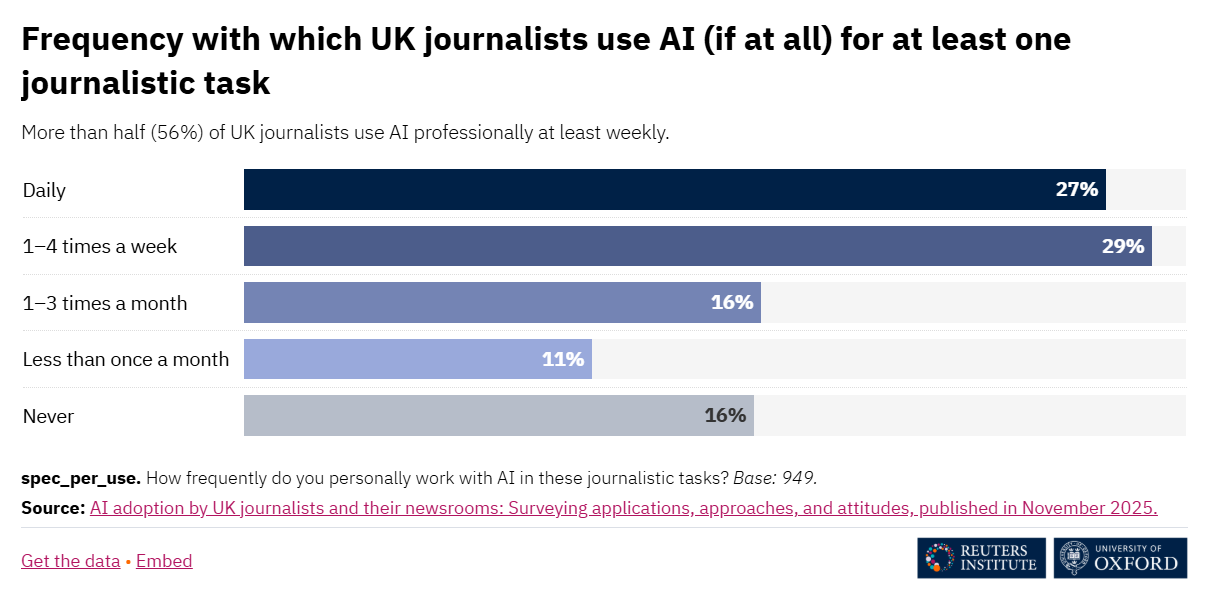
Meanwhile, Reuters Institute research shows journalists primarily use AI as an assistant for repetitive tasks such as transcription, summarising documents, background research and drafting, rather than replacing core reporting or editorial judgement.
Much of the disagreement comes from measuring different things.
Freelance studies examine contract demand, while labour statistics measure entire occupations. Productivity experiments demonstrate that AI allows work to be completed faster, but they do not prove employers subsequently reduced headcount. Likewise, newsroom layoffs linked to AI often reflect wider economic pressures, including declining search traffic and changing advertising models.
It is also important to distinguish task automation from occupation replacement. ChatGPT can draft product descriptions, summarise reports or write basic marketing copy, but investigative journalism, source verification, legal review, editorial judgement and original reporting continue to rely heavily on human expertise.
The claim that "ChatGPT is replacing writers and journalists" is partially true but overstated.
There is strong evidence that generative AI is already replacing some forms of writing work, particularly routine copywriting, SEO content, translation and low-cost freelance assignments.
Businesses are producing more content with fewer labour hours, and demand for certain writing services has measurably declined.
The case for journalism is weaker. AI is unquestionably transforming newsrooms and contributing indirectly to industry job losses through changes in search, publishing and media economics.
However, there is currently limited evidence that professional journalists are being replaced at scale by ChatGPT itself.
"The biggest shift we're seeing isn't that AI has replaced experienced writers; it's that it's replacing the need for certain types of routine writing. Businesses still need original research, expert analysis and content that demonstrates real experience and earns trust. Those are areas where human expertise continues to provide a competitive advantage."
Shoaib Mughal, Founder and SEO Director at Marketix Digital
The strongest conclusion supported by today's research is that AI is replacing specific writing tasks and some categories of writing work much faster than it is replacing entire professions.
For writers and journalists alike, the role is evolving, but human expertise, verification and editorial judgement remain essential where accuracy, accountability and trust matter most.

As AI changes how content is created and discovered, businesses need a strategy that goes beyond AI-generated copy.
Marketix Digital helps brands grow through evidence-based SEO, authoritative content and sustainable organic search strategies built for the AI era.
Recent Posts
Download our 24-page SEO book to learn:
You have successfully joined our subscriber list.
Recent Posts